Want to Work Overseas? Here are the Top 10 Things You Need to Do First
Updated On
-
Copy link
-
-
If you want to work overseas, you need to take care of a few things like understanding your visa options, among other things. Find out the top 10 things you need to do to be able to work abroad in 2026.

Your Complete Canada PR Roadmap- From Eligibility to Visa

Table of Contents
Working overseas is a career move that opens doors to global opportunities, fresh experiences, and stronger professional growth. That said, turning this dream into reality takes smart planning, preparation and a clear game plan.
Before you start imagining your life overseas, you need to have a clear idea of the steps that you need to take first. From settling on the right country to preparing your documents, the journey begins long before you board a flight. Here are the top 10 things you need to do if you want to work overseas.
Top 10 Things You Need To Do For Your Overseas WorkÌý
If you ever anticipate the chance to work abroad, it's wise to seize the opportunity. Here are the 10 essential steps to realise your dream of an international career.
1. Research and Focus on Future-Proof EconomyÌý
Ìý

Your initial research must move beyond general job prospects and target sectors with guaranteed growth, and your move must align with a future-proof economy.Ìý Instead of simply looking at "job prospects", research the specific national demand for the following global growth sectors:
-
Artificial Intelligence (AI) and Machine Learning (ML)
-
Cybersecurity and Data Protection
-
Cloud Engineering and DevOpsÌý
-
Renewable Energy and ESG (Environmental, Social, and Governance)
Also Read:Ìý12 Safest Country in The World For Indian Immigrants
2. Know Your Visa Options
In the modern economy, working abroad isn’t just confined to the traditional work permit. Your immigration path now depends on who your employer is and where your income is generated.Ìý
You should consider the following three pillars of legal structure with a company that is located in the destination country:Ìý
- Traditional Work Permits (Physical Relocation)
This is one of the standard routes when your employment contract is directly with a company located in the destination country.
- Who it’s for: Individuals like a software engineer moving to Munich to work for a German firm, which means physically relocating to work in a local office.Ìý
-
The Process: The local employer must typically sponsor your visa. This often involves the company proving to the government that they could not find a suitable local candidate.
-
Requirement: A job offer from a company registered in the destination country is usually mandatory before you can apply for the work permit.
- Digital Nomad Visas (DNVs) – The Remote Worker RouteÌý
A digital nomad visa is a modern category of temporary residence permits that allows you to legally reside in a foreign country while working remotely for a company or clients outside of the country.Ìý
Who it’s for: Employees, freelancers, or business owners whose income is sourced entirely (or mostly) from abroad. This is ideal for those seeking an extended stay without needing local employment.
- Requirements (Vary depending on the Country):
-
Minimum Income: You must prove a stable monthly income that meets the country’s benchmark (often verified via bank statements and contracts).
-
Example (Portugal D8 Visa): Requires a monthly income of at least 3,480 euros (around 4 times the national minimum wage).
-
Example (Spain DNV): Requires a minimum monthly income of around 2,763 euros (for a single applicant).
-
Example (UAE Virtual Work Visa): Requires a minimum monthly income of 3,500 USD.
-
Health Insurance: Mandatory private health insurance coverage valid for the duration of your stay.
-
Clean Record: A criminal record certificate from your previous country of residence.
Essential Tax Note: DNVs often come with favourable temporary tax schemes (for example, Spain's reduced non-resident tax rate), but you must still understand when you become a tax resident in the host country; research this before applying.Ìý
Also Read: Different Canada Visa Types from India for Indians, Different Types of Australian Visa You Should Know About
3. Learn Your Ways to Finding Job Opportunities Abroad
Finding a job abroad while being located outside the country could be a tough task but certainly not impossible. One of the best ways is to see the guidance of righteous immigration experts.
You can use social networking sites like LinkedIn or job boards like Indeed, etc to help your job search. Alternatively, you could also seek help from familiar people residing in that country.
Also Read: Which Country Has More Job Opportunities For Indians?
4. Networking is the Key
Ìý

In today’s world of globalization and actively changing work environments, the most important key to a successful career is networking. Networking is a very powerful tool that helps you connect with people living on the other side of the globe.
This could not just help you in finding jobs to work overseas but also for advising learning current trends, joining groups or forums to enhance communication with expats and locals, etc.
5. Structure Your CV and Cover Letters That Define Your Skills
The CV is now only one component of your professional package. You must optimise your documents for Applicant Tracking Systems (ATS) and focus on jotting down skills over job descriptions.ÌýÌý
CV Optimization (ATS-Friendly)Ìý
- Draft Your CV as ATS-Friendly Formatting: Draft a simple and clean design with standard fonts (likeÌý Arial, Calibri). Avoid tables, graphics, and overly complex headers, as these can confuse ATS software.Ìý
- Focus on Skills-First Language: Don’t write generic duties; instead, focus on Action-Result statements that quantify your impact and highlight specific skills likeÌý "Automated ETL process using Python and Pandas, resulting in a 40% reduction in manual data entry time.Ìý
- Write about Digital Collaboration Tools that you have used: List your fluency with tools that define modern, distributed teams: Slack, Notion, Asana, Microsoft Teams, Jira, and Zoom.Ìý
6. Increase Your Familiarity: Research the Country and its Culture
One of the other important things, when you wish to travel to a foreign country is to understand the country’s culture and environment because it’s an unknown fact that you are stepping into a whole lot of differences compared to your present.
Don’t worry because it’s not necessarily a fact that experiences need to be harsh but you need to have an open mind to embrace what the foreign country has to offer - be it the locals, neighborhood, festivities, heritage, etc.
Also Read: 8 Best Countries in Europe to Live and Work for Indians
7. Ensure No Lapse in Your Taxes
Ìý
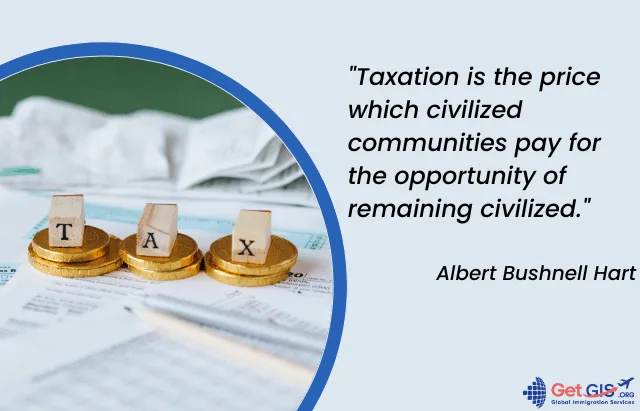
Tax regulations differ based on your intended relocation destination. Therefore, comprehending the new tax system is vital, and clearing your tax obligations in your home country is crucial.
Make sure to evaluate what you would be receiving (salary) compared to the taxes that you would have to pay w.r.t overseas employment to decide if the chosen destination is a good choice or not.
You would certainly want to lead a better quality of life than your present which you need to ensure by making your calculations for making informed decisions.
8. Do not Overdo Your Packaging
When relocating, it is a natural phenomenon for individuals to pack multiple things (required or not) so that they do not have a feeling of missing anything back home. But rather what we suggest is not to overdo or pack too much so that it becomes a challenge for you to transport and store in the new country.
Make a list of what you might specifically need in the new country and pack accordingly. This will help you with bandaging all your essentials, and also ensure that you do not overdo your packing.
Also Read: 20 Things To Carry While Travelling To Australia From India, Things To Carry While Traveling To Canada From India
9. Try Becoming More Systematised: Regularise Your Routine
When moving to a new place routine plays a crucial role in reflecting your sincerity and commitment, mainly in foreign countries. So rather than pushing yourself once and for all, try regularizing your body even before taking your take-off.
A comfortable routine could also serve as your foundation for new experiences and adventures that you are likely to live through in the tenure of working abroad.
Also Read: 10 Benefits of Working Abroad: A Life-Changing Experience
10. Speak Confidently: Communication is the Key
Ìý

The ability to communicate is one of the main factors in working overseas job. One of the reports by (Team chat app) states that 86% of employees cite lack of communication as one of the major reasons for workplace failures and on the other hand, the teams who had effective communication witnessed a productivity increase of 25%.
Also Read: 11 Ultimate Benefits of Learning a Second Language
How ³ÉÈËÿÈÕ´óÈü Could Be Your Rightful Immigration Assistance Partner!
Immigrating abroad is life-changing, and having the right support is essential for a smoother journey. We believe this is the way you'd want to immigrate too.
For a successful immigration journey, ³ÉÈËÿÈÕ´óÈü is your top choice. We stand out by offering a tech-driven platform for real-time application tracking – a unique feature in the industry.
Our comprehensive services include visa applications, IELTS training, job search support, and resume writing, all at fair and competitive rates. At the core of our values is customer-centricity, ensuring a secure and transparent immigration experience for every client.
So why delay further? , Today.
Useful Links: For Further Information
Working in Canada can boost your PR score- check where you stand
Frequently Asked Questions
What are the key benefits of working overseas?
How do I prepare my resume and cover letter for international job applications?
What should I consider when negotiating salary and benefits for an overseas job offer?
What are some common challenges expats face while living and working in a foreign country?
How do I handle the cultural differences and potential language barriers when working abroad?
What steps should I take to ensure my qualifications and certifications are recognized and valid in my new country of employment?