Healthcare System in Germany: Heal with Excellence under Germany’s Quality Healthcare
Updated On
-
Copy link
-
-
The healthcare system in Germany uses a public and private insurance model where employees contribute about 14.6% of income and gain access to hospitals, specialists and sickness benefits. Curious about eligibility, costs and coverage? Keep reading ahead!

Limited-time offer : Access a free 10-Day IELTS study plan curated for you

Table of Contents
- Overview of Healthcare System in Germany
- Access to Healthcare in Germany
- Health Promotion and Disease Prevention in Germany
- Cost of Public Healthcare in Germany
- Public vs. Private Health Insurance in Germany
- Latest Developments in Germany Healthcare System
- How Can Foreign Workers Benefit from Germany Healthcare System?
- Get Your Job Seeker Visa & Access Germany's World-class Healthcare
- Thinking of Moving Abroad? Here's How We Can Help
Germany is known for one of the most efficient and well-structured medical systems in the world. The healthcare system in Germany combines public and private insurance models, ensuring that residents have access to high-quality medical services, modern hospitals, and well-trained healthcare professionals.
What makes the healthcare in Germany stand out is its strong focus on accessibility, preventive care, and regulated insurance coverage. From routine doctor visits to advanced treatments, patients benefit from reliable services and shorter waiting times compared to many other countries. Keep reading this blog to understand how the German healthcare system actually works.
Overview of Healthcare System in Germany
Germany operates one of the oldest and most reliable healthcare systems in the world. With a strong mix of public and private insurance, the healthcare system in Germany ensures that most residents have access to quality medical services, trained specialists, and modern healthcare facilities.
How the German Healthcare System Works
Germany’s healthcare structure is primarily based on statutory health insurance, known as Gesetzliche Krankenversicherung (GKV). This is the standard healthcare coverage for most residents and employees in the country.
- Around 110 public sickness funds (Krankenkassen) operate in Germany, offering public health insurance plans.
- These insurers provide access to doctors, hospitals, and specialist care.
- Although different providers exist, most public insurance plans offer similar core benefits.
In addition to public coverage, certain groups such as high-income earners and self-employed individuals can choose private health insurance (Private Krankenversicherung - PKV). Private insurance often works as extended or alternative coverage for services not fully included in the public system.
How Healthcare is Funded
Germany spends more on healthcare than most European countries relative to its economic output.
- Around 12.8% of Germany’s GDP goes toward healthcare.
- The annual healthcare spending averages over EUR 5,000 per person.
Public healthcare is mainly funded through mandatory salary contributions:
|
Contribution Type |
Details |
|
Employee contribution |
Around 7.3% of the salary |
|
Employer contribution |
Around 7.3% of salary |
|
Total public insurance rate |
14.6% of gross income |
|
Additional insurer fee |
About 1% on average |
|
Quarterly doctor visit fee |
Approximately EUR 10-15 for the first visit each quarter |
Who is Covered Under the German Healthcare System?
Germany’s public healthcare system covers the majority of the population.
- About 90% of residents are enrolled in public health insurance.
- Employees earning between EUR 520 and EUR 5,550 per month typically qualify for statutory insurance.
- Individuals receiving unemployment benefits or pensions are also covered.
Family members can often be included in the same policy:
- Spouses or civil partners with little or no income
- Children up to age 23, or 25 if they are studying
However, certain groups must rely on private insurance, including:
- Students over 30 years old
- PhD candidates
- Non-residents or temporary visitors
Services Covered by Public Healthcare in Germany
The public healthcare system provides access to a wide range of medical services.
Key services include:
- Outpatient care with general doctors and specialists
- Hospital treatments and emergency services
- Vaccinations and prescription medications
- Dental and vision care (with certain limitations)
- Mental health services, including therapy sessions
Also Read:ÌýHow to Settle in Germany from India in 2026?
Access to Healthcare in Germany
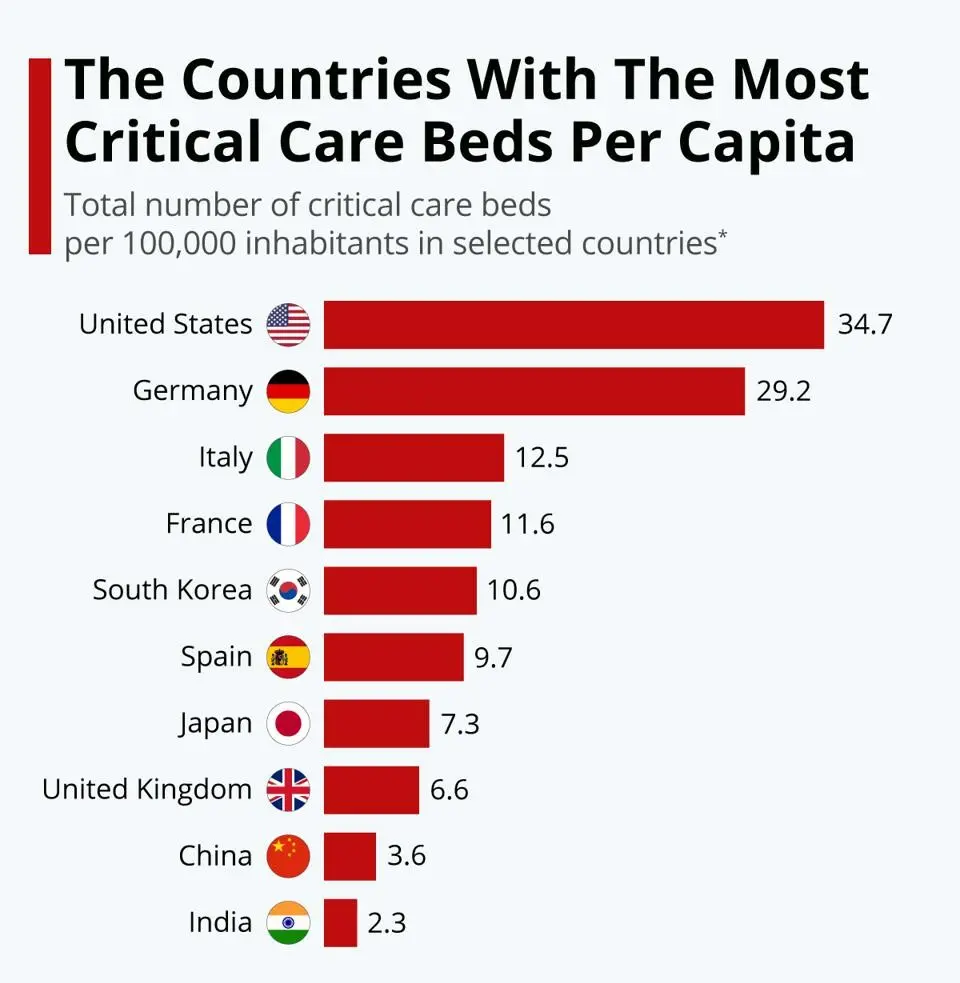
In Germany, access to healthcare is considered a fundamental right, and the healthcare system ensures that all residents, regardless of their background or income level, have access to necessary medical services.
The healthcare system also promotes timely access to care, with a majority of Germans being able to secure same-day appointments with their primary care physicians. This emphasis on accessibility ensures that individuals receive necessary medical care without financial barriers, leading to better health outcomes.
Source: Statista
Health Promotion and Disease Prevention in Germany
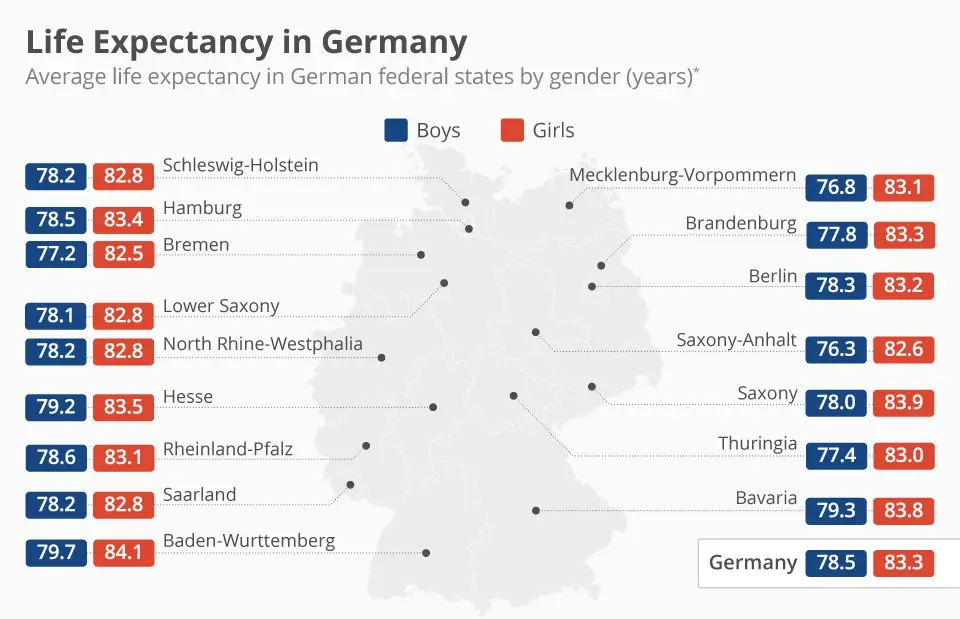
Germany places a strong emphasis on health promotion and disease prevention programs to improve overall population health. Vaccination programs, health screenings, and health education initiatives are widely implemented to prevent diseases and detect them early.
Source: Statista
Ìý
Explore: Career Opportunities in Germany
Cost of Public Healthcare in Germany
Germany’s public health insurance system, known as statutory health insurance, ensures that most residents have access to affordable medical care. The cost of public healthcare in Germany is mainly income-based, meaning contributions are calculated as a percentage of a person’s salary. Below is an overview of the costs associated with public healthcare in Germany.
|
Healthcare Expense |
Estimated Cost |
|
Public Health Insurance Contribution |
14.6% of gross salary |
|
Additional Health Insurance Contribution |
1.3% - 1.7% (varies by insurer) |
|
Employer Contribution |
Around 50% of the total insurance cost |
|
Doctor Visit (with public insurance) |
Usually covered |
|
Hospital Stay |
EUR 10 per day (up to 28 days per year) |
|
Prescription Medicines |
EUR 5 - 10 per prescription |
|
Dental Check-ups |
Mostly covered |
|
Dental Treatments (major procedures) |
Partial coverage |
|
Physiotherapy Session |
EUR 10 per session + small co-payment |
|
Maternity Care |
Fully covered under public insurance |
Public vs. Private Health Insurance in Germany
Germany offers two main types of health insurance systems: public and private. While both provide access to quality healthcare services, they differ in terms of cost structure, eligibility, and the level of coverage offered to patients. Below is a comparison between private and public insurance in Germany.
|
Particulars |
Public Health Insurance (Statutory) |
Private Health Insurance |
|
Premium |
Around 14.6% of income (salary-based) |
Premium depends on age, health condition, and selected coverage |
|
Flexibility |
Standard plan with similar coverage for members |
Different plans available with customizable benefits |
|
Eligibility |
Available to most employees and residents |
Mainly for high-income earners, self-employed, civil servants, and some students |
|
Family Coverage |
Spouse and children with little or no income can be included without extra cost |
Each family member requires a separate policy |
|
Hospital Stay |
Usually shared hospital rooms with assigned doctors |
Option for private rooms and treatment by senior physicians |
|
Dental Coverage |
Basic dental treatments generally covered |
Broader dental treatments depending on the chosen plan |
|
Vision Care |
Limited support, only in specific cases |
Often includes wider coverage depending on the policy |
|
Worldwide Coverage |
Limited or requires additional insurance |
Often includes international coverage |
|
Medication Co-payment |
Small co-payment required for prescriptions |
Depends on policy terms and chosen coverage |
Quick Read:ÌýInclusive Culture Germany
Latest Developments in Germany Healthcare System
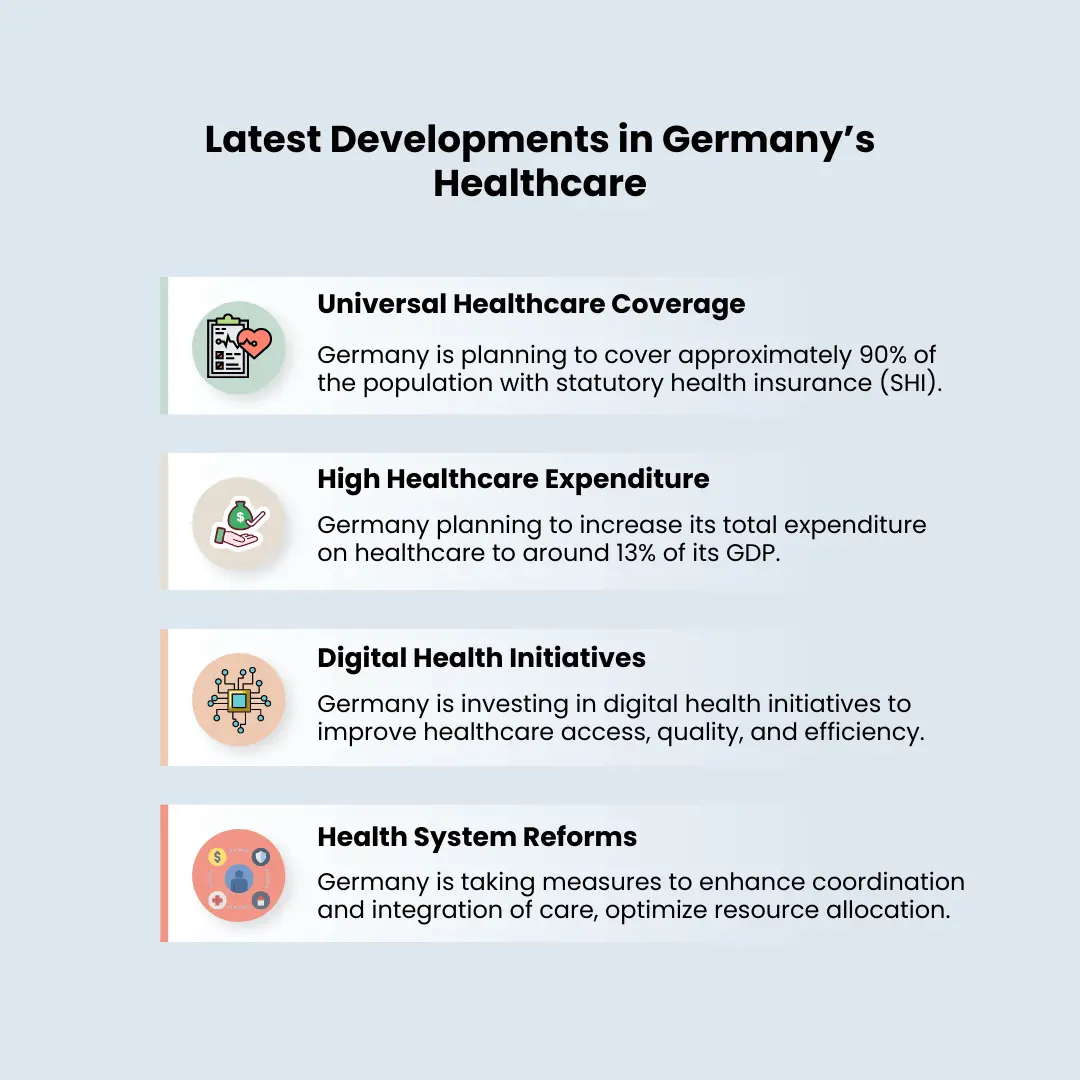
1. Universal Healthcare Coverage
Germany has a universal healthcare system that provides comprehensive coverage to all its citizens and residents. As of 2021, approximately 90% of the population is covered by statutory health insurance (SHI), while the remaining 10% have private health insurance (PHI) coverage. (source: Commonwealth Fund).
2. High Healthcare Expenditure
Germany has one of the highest healthcare expenditure levels in the world. In 2019, the total expenditure on healthcare in Germany amounted to around 11.3% of its GDP, reflecting the country's commitment to providing high-quality healthcare services. (source: World Bank)
3. Digital Health Initiatives
Germany is investing in digital health initiatives to improve healthcare access, quality, and efficiency. This includes the development of electronic health records (EHRs), telehealth services, and health apps, which aim to enhance communication between healthcare providers, patients, and payers, and facilitate remote monitoring and care delivery.
4. Health System Reforms
Germany is constantly reviewing and reforming its healthcare system to address emerging challenges and improve healthcare outcomes. This includes measures to enhance coordination and integration of care, optimize resource allocation, and promote health equity.
Suggested Reading:ÌýGuide to the Ultimate Benefits of Working in Germany
How Can Foreign Workers Benefit from Germany Healthcare System?
Germany offers a reliable and well-organized healthcare system that also benefits international professionals working in the country. Once employed and insured, foreign workers can access the same medical services and protections available to German residents. Here are some key ways foreign workers benefit from the healthcare system in Germany.
Access to High-Quality Medical Services
Foreign workers in Germany can visit qualified doctors, specialists, and modern hospitals once they are enrolled in a health insurance plan. The country is known for advanced medical technology and well-trained healthcare professionals. This ensures reliable treatment for both routine and serious health conditions.
Mandatory Health Insurance Coverage
Health insurance is compulsory for everyone working in Germany, including international employees. Employers and employees share the contribution cost, making it more affordable. This system ensures that foreign workers are financially protected during medical emergencies.
Coverage for Family Members
Public health insurance often allows spouses and children with little or no income to be included under the same policy. This means foreign workers can secure healthcare coverage for their families without paying additional insurance fees in many cases.
Affordable Medical Costs
Because the healthcare system is largely insurance-based, most medical expenses, such as doctor visits, hospital treatment, and preventive care, are either fully covered or require only small co-payments. This reduces the financial burden of healthcare for foreign professionals.
Access to Preventive Healthcare
Germany strongly emphasizes preventive care. Foreign workers can benefit from regular health check-ups, vaccinations, and early screenings for certain diseases. These services help detect health issues early and maintain overall well-being.
Efficient Emergency and Specialist Care
In case of medical emergencies, foreign workers can access quick emergency services and hospital care. Health insurance also allows referrals to specialists when required, ensuring patients receive appropriate treatment without long delays.
Also Read:ÌýTop 10 Highest Paying Jobs in Germany in 2026
Get Your Job Seeker Visa & Access Germany's World-class Healthcare
Germany's healthcare system is characterized by its emphasis on accessibility, health outcomes, and patient-centred care. With its comprehensive coverage, advanced medical technologies, and patient-centric approach, Germany's healthcare system continues to be recognized as one of the best in the world.
If you want to live in a country with top-notch healthcare then Germany is one the best for you. ³ÉÈËÿÈÕ´óÈü (Global immigration service) is your gateway to accessing Germany's world-class healthcare system. As a non-EU/EEA job seeker, obtaining a Job Seeker Visa can provide you with the opportunity to explore job opportunities in Germany while also gaining access to comprehensive healthcare coverage.
Get in touch with ³ÉÈËÿÈÕ´óÈü to confidently pursue your career goals in Germany knowing you have access to high-quality healthcare services.
Thinking of Moving Abroad? Here's How We Can Help
- Point calculation: In ³ÉÈËÿÈÕ´óÈü, we calculate your points on your behalf to eliminate any chances of rejection or failure.
- Visa application: ³ÉÈËÿÈÕ´óÈü helps you to complete your visa application properly and we even train you for your visa interview process, to make your immigration journey easier.
- Preparation for Language Test: ³ÉÈËÿÈÕ´óÈü offers you expert guidance for your preparation for language tests like IELTS/PTE/CELPIP.
- Expert guidance for each step of your immigration: With ³ÉÈËÿÈÕ´óÈü, you rest assured about your immigration journey. We help you to take every step in the right direction to make your immigration journey smooth.
- Job Search assistance: At ³ÉÈËÿÈÕ´óÈü, you receive complete job search assistance, from CV optimization, to mock interviews everything is covered by ³ÉÈËÿÈÕ´óÈü. And we won’t leave you alone until you get your job in your dream country.
Useful links for Further Reading and Information:
Limited-time offer : Access a free 10-Day IELTS study plan curated for you
Frequently Asked Questions
Is healthcare in Germany free for everyone?
What is the difference between statutory health insurance (GKV) and private health insurance (PKV) in Germany?
Can I choose my own doctor in Germany?
Are prescription medications covered by health insurance in Germany?
How long do I have to wait for medical appointments or surgeries in Germany?